Buy 0l.eu ?
We are moving the project
0l.eu .
Are you interested in purchasing the domain
0l.eu ?
domain@kv-gmbh.de · 0541-91531010
Buy 0l.eu ?
What is the particle model and what is the tau particle?
The particle model is a scientific theory that describes the behavior and interactions of subatomic particles. It explains the properties of particles such as their mass, charge, and spin, and how they interact with each other through fundamental forces. The tau particle is a type of subatomic particle that belongs to the lepton family, along with the electron and the muon. It is similar to the electron but is much heavier and has a shorter lifespan. The tau particle is involved in weak interactions and is produced in high-energy particle collisions, such as those that occur in particle accelerators. Its discovery in 1975 provided further evidence for the existence of the third generation of fundamental particles. **
What are particle pronouns?
Particle pronouns are pronouns that are used in combination with a preposition to indicate a specific relationship or direction. They are typically used to show the relationship between the subject or object of a sentence and other elements in the sentence. In English, common particle pronouns include words like "me," "him," "her," "us," and "them." These pronouns are essential for conveying precise meaning and clarity in communication. **

Similar search terms for Particle
Top-Angebote
Products related to Particle:
-
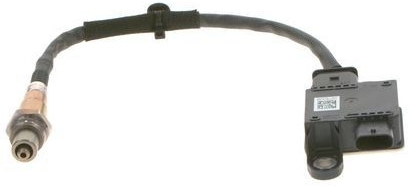
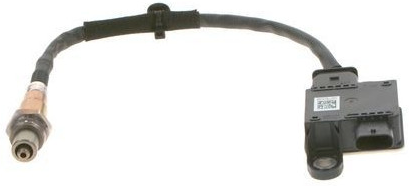
EINPARTS EPS3050 Particle SensorConnector Shape: D Shape; Weight [kg]: 0,023; Number of circuits: 2; Number of mounting bores: 2; Number of pins: 3; Emissions Standard: Euro 4 (D4); Vehicle Equipment: for vehicles with diesel particulate filter (DPF); alternatively: ; Supplementary Article / Supplementary Info Info 2: Control Unit/Software must be trained/updated; Packaging Depth [cm]: 6,8, 7,1; Vehicle Identification Number (VIN) to: 5J-9B601986, 5J-95038314, 3D-8-007000, 5J-9-A50951, 5J-9-B50766, 5J-9-K51398, 5J-9-317078; Production date to: 25.05.2009; Engine Code: CBDB, CBAB25,99 £*Shipping: 8,45 £Secure redirect to the provider



-
Is today a particle?
No, today is not a particle. Today is a concept that represents the current day in the calendar. Particles are tiny units of matter that make up everything in the universe. Today is a human construct used to organize time and events. **
-
What is the particle model?
The particle model is a scientific concept used to describe the behavior and properties of matter at the atomic and molecular level. It suggests that all matter is made up of tiny particles that are constantly in motion. These particles have spaces between them and interact with each other through forces such as attraction and repulsion. The particle model helps explain various phenomena in physics and chemistry, such as changes in state, diffusion, and the behavior of gases. **
-
Is 0 a virtual particle?
No, 0 is not a virtual particle. Virtual particles are particles that exist temporarily as intermediate states in particle interactions, but they do not correspond to real, observable particles. In contrast, 0 is a number that represents the absence of quantity or value, and it does not have the properties of a particle. **
-
Are black holes particle accelerators?
Black holes are not particle accelerators in the traditional sense, as they do not accelerate particles in the same way that a particle accelerator like the Large Hadron Collider does. However, black holes can accelerate particles through a process called Hawking radiation, where particles are created near the event horizon and one falls in while the other escapes, effectively creating the appearance of acceleration. This process is not well understood and is still a topic of ongoing research in the field of theoretical physics. **


What is a beta particle?
A beta particle is a high-energy, high-speed electron or positron emitted by certain types of radioactive decay. Beta decay occurs when a neutron in the nucleus of an atom is transformed into a proton, with the emission of a beta particle. Beta particles can penetrate materials and cause damage to living tissue, making them a concern in radiation safety. They are also used in various applications, such as in medical imaging and cancer treatment. **
What is the particle koto?
The particle "koto" in Japanese is used to nominalize a verb or a clause, turning it into a noun. It is often translated as "thing" or "fact" in English. For example, the phrase "taberu koto" would mean "the act of eating" or "eating" as a noun. It is commonly used to express abstract concepts or actions as concrete nouns in Japanese sentences. **
Top-Angebote
Products related to Particle:
-
Collins Easy Learning Spanish Grammar And Practice: Trusted Support For Learning - Non FictionTitle:. Easy Learning Spanish Grammar and Practice Overview:. Master the essential foundations of Spanish with Easy Learning Spanish Grammar and Practice, a comprehensive non-fiction guide engineered to demystify complex grammar rules while building genuine, usable confidence through targeted exercises. This trusted resource moves well beyond passive reading, offering a structured, interactive pathway for learners to understand the mechanics of the language and immediately apply that knowledge. Ideal for individuals navigating the early stages of language acquisition or solidifying intermediate skills, the book functions as a versatile companion that adapts to varied learning styles and paces. By pairing clear, jargon-free explanations with practical application tasks, it ensures that every grammatical concept transforms into functional competence. The content covers critical areas such as verb conjugations, sentence syntax, noun agreement, and descriptive structures, presenting them in a logical sequence that reinforces memory retention. Readers benefit from a design that prioritises clarity over complexity, stripping away intimidating linguistic terminology in favour of straightforward insights that get straight to the point. As a standalone volume, it provides everything needed to tackle the challenges of Spanish grammar independently, making it a highly efficient choice for self-motivated students seeking reliable support for their studies. What Makes This Book Stand Out:. The standout feature of Easy Learning Spanish Grammar and Practice is its relentless integration of the "practice" promise directly into the learning flow. Unlike reference manuals that relegate exercises to the back, this book embeds practice questions seamlessly alongside explanations, allowing readers to test their understanding instantly and receive immediate feedback within the context of each topic. This active recall methodology significantly enhances long-term retention compared to traditional review habits. Furthermore, the book employs an effective scaffolding approach; new rules are introduced only after core principles are secure, preventing cognitive overload and ensuring a steady buildup of competence. The layout further distinguishes itself through high readability standards, featuring generous spacing, helpful navigation aids, and a presentation that respects the learner's time. The text also shines in its ability to contextualise grammar, showing how abstract rules translate into real-world communication, thereby bridging the gap between academic theory and spoken fluency. This balanced focus on both mechanical accuracy and communicative utility gives the book exceptional versatility. It serves equally well as a primary study textbook, a rapid-reference guide for assignment preparation, and a durable portfolio piece that grows more valuable with every chapter reviewed. Who This Book Is Perfect For:. Easy Learning Spanish Grammar and Practice caters to a...12,99 £*Shipping: 2,99 £Secure redirect to the provider
-
EINPARTS EPS3050 Particle SensorConnector Shape: D Shape; Weight [kg]: 0,023; Number of circuits: 2; Number of mounting bores: 2; Number of pins: 3; Emissions Standard: Euro 4 (D4); Vehicle Equipment: for vehicles with diesel particulate filter (DPF); alternatively: ; Supplementary Article / Supplementary Info Info 2: Control Unit/Software must be trained/updated; Packaging Depth [cm]: 6,8, 7,1; Vehicle Identification Number (VIN) to: 5J-9B601986, 5J-95038314, 3D-8-007000, 5J-9-A50951, 5J-9-B50766, 5J-9-K51398, 5J-9-317078; Production date to: 25.05.2009; Engine Code: CBDB, CBAB25,99 £*Shipping: 8,45 £Secure redirect to the provider
-
What is the particle model and what is the tau particle?
The particle model is a scientific theory that describes the behavior and interactions of subatomic particles. It explains the properties of particles such as their mass, charge, and spin, and how they interact with each other through fundamental forces. The tau particle is a type of subatomic particle that belongs to the lepton family, along with the electron and the muon. It is similar to the electron but is much heavier and has a shorter lifespan. The tau particle is involved in weak interactions and is produced in high-energy particle collisions, such as those that occur in particle accelerators. Its discovery in 1975 provided further evidence for the existence of the third generation of fundamental particles. **
-
What are particle pronouns?
Particle pronouns are pronouns that are used in combination with a preposition to indicate a specific relationship or direction. They are typically used to show the relationship between the subject or object of a sentence and other elements in the sentence. In English, common particle pronouns include words like "me," "him," "her," "us," and "them." These pronouns are essential for conveying precise meaning and clarity in communication. **
-
Is today a particle?
No, today is not a particle. Today is a concept that represents the current day in the calendar. Particles are tiny units of matter that make up everything in the universe. Today is a human construct used to organize time and events. **
-
What is the particle model?
The particle model is a scientific concept used to describe the behavior and properties of matter at the atomic and molecular level. It suggests that all matter is made up of tiny particles that are constantly in motion. These particles have spaces between them and interact with each other through forces such as attraction and repulsion. The particle model helps explain various phenomena in physics and chemistry, such as changes in state, diffusion, and the behavior of gases. **
Similar search terms for Particle
-
Is 0 a virtual particle?
No, 0 is not a virtual particle. Virtual particles are particles that exist temporarily as intermediate states in particle interactions, but they do not correspond to real, observable particles. In contrast, 0 is a number that represents the absence of quantity or value, and it does not have the properties of a particle. **
-
Are black holes particle accelerators?
Black holes are not particle accelerators in the traditional sense, as they do not accelerate particles in the same way that a particle accelerator like the Large Hadron Collider does. However, black holes can accelerate particles through a process called Hawking radiation, where particles are created near the event horizon and one falls in while the other escapes, effectively creating the appearance of acceleration. This process is not well understood and is still a topic of ongoing research in the field of theoretical physics. **
-
What is a beta particle?
A beta particle is a high-energy, high-speed electron or positron emitted by certain types of radioactive decay. Beta decay occurs when a neutron in the nucleus of an atom is transformed into a proton, with the emission of a beta particle. Beta particles can penetrate materials and cause damage to living tissue, making them a concern in radiation safety. They are also used in various applications, such as in medical imaging and cancer treatment. **
-
What is the particle koto?
The particle "koto" in Japanese is used to nominalize a verb or a clause, turning it into a noun. It is often translated as "thing" or "fact" in English. For example, the phrase "taberu koto" would mean "the act of eating" or "eating" as a noun. It is commonly used to express abstract concepts or actions as concrete nouns in Japanese sentences. **
* All prices are inclusive of VAT and, if applicable, plus shipping costs. The offer information is based on the details provided by the respective shop and is updated through automated processes. Real-time updates do not occur, so deviations can occur in individual cases. ** Note: Parts of this content were created by AI.