Buy 0l.eu ?
We are moving the project
0l.eu .
Are you interested in purchasing the domain
0l.eu ?
domain@kv-gmbh.de · 0541-91531010
Buy 0l.eu ?
Should one learn grammar or vocabulary first when learning Japanese?
When learning Japanese, it is generally recommended to start with vocabulary before diving into grammar. Building a strong vocabulary base will help you understand and communicate better in the language. Once you have a good grasp of basic vocabulary, you can then focus on learning grammar rules to structure your sentences correctly. Ultimately, a balance of both vocabulary and grammar is essential for mastering Japanese. **
Are they flat feet or normal feet?
It is not accurate to label feet as "flat" or "normal" as there is a wide range of foot shapes and arch types that can be considered normal. Some people have lower arches, which may be referred to as "flat feet," while others have higher arches. Both types of feet can be considered normal and functional. It's important to focus on the overall health and function of the feet rather than categorizing them as flat or normal. **


Similar search terms for Feet
Top-Angebote
Products related to Feet:
-
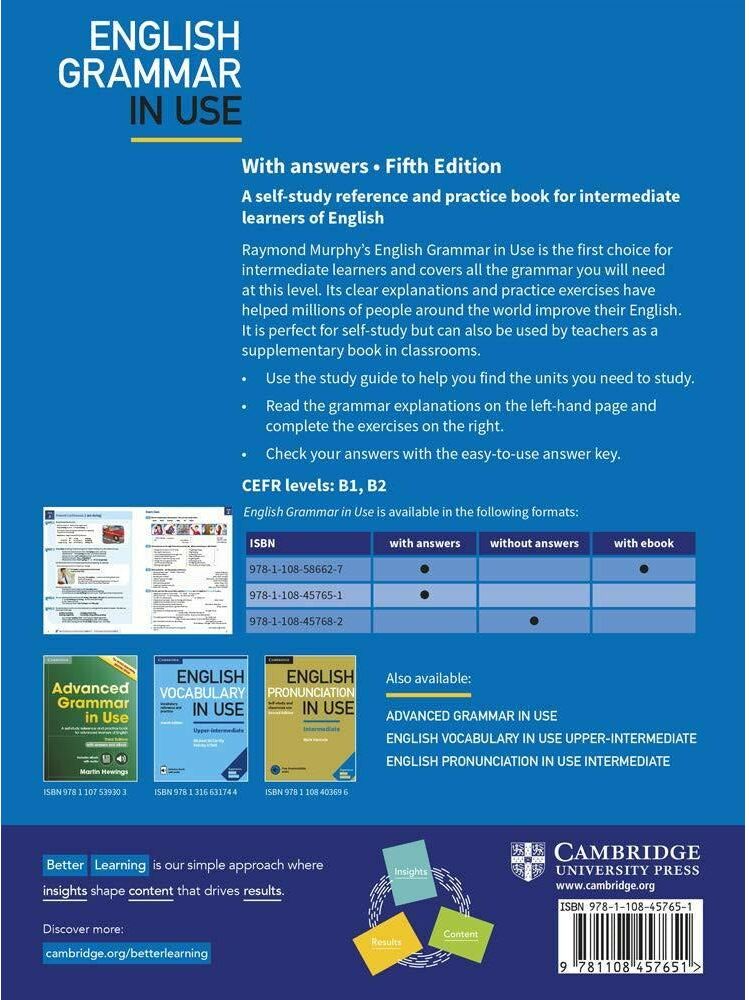
Cambridge University Press English Grammar in Use with Answers by Raymond Murphy – Self-Study Grammar Book for Intermediate LearnersEnglish Grammar in Use with Answers; authored by Raymond Murphy; is the first choice for intermediate (B1-B2) learners and covers all the grammar required at this level. It is a self-study book with simple explanations and lots of practice exercises; and has helped millions of people around the world to communicate in English. It is also trusted by teachers and can be used as a supplementary text in classrooms.12,49 £*Shipping: 2,99 £Secure redirect to the provider
-
Collins Easy Learning Grammar and Punctuation Ages 7-9: Prepare for school with easy home learningDescription. Title :. Grammar and Punctuation Ages 7-9: Prepare for school with easy home learning. Condition: BRAND NEW. Format: Paperback. ISBN: 9780008134228. Combining useful English practice with engaging, colourful illustrations, this Grammar and Punctuation practice book helps to boost your child’s confidence and develop good learning habits for life. Each fun activity is designed to give your child a real sense of achievement.Included in this book:questions that allow children to practise the important skills learned at schoolcolourful activities that make learning fun and motivate children to learn at home helpful tips and answers so that you can support your child’s learning. About the Author:. Colourful and engaging activity books really help children progress at every stage of their learning. With helpful questions and answers, this best-selling range provides reassurance whilst supporting learning at home. Combining useful practice with motivating activities, they help to boost confidence and give children a real sense of achievement.. Title. Grammar and Punctuation Ages 7-9: Prepare for school with easy home learning. Delivery. Content. Reviews3,99 £*Shipping: 2,99 £Secure redirect to the provider
-
Collins Easy Learning English Grammar And Punctuation 1 By Collins Education - Non Fiction - PaperbackTitle:. Collins Easy Learning English Grammar And Punctuation 1 Format: Paperback Overview:. The Collins Easy Learning English Grammar And Punctuation 1 delivers a focused, highly practical introduction to the foundational rules that govern effective written English. Published by Collins Education, this volume serves as the first entry in a widely respected instructional series designed to break down complex linguistic concepts into manageable, easy-to-follow lessons. Rather than presenting dense theoretical lectures, the book adopts a structured, activity-driven approach that guides readers through essential grammar topics, punctuation conventions, clause construction, and common syntactical patterns. Each chapter pairs clear explanations with targeted exercises that reinforce understanding through immediate application. The layout prioritises readability, using spacious margins, defined headings, and visual cues that make self-directed study straightforward. Whether you are preparing for formal assessments, rebuilding foundational literacy skills after years away from academia, or simply aiming to eliminate recurring errors in everyday documents, this guide provides a reliable pathway to clearer, more confident writing. By combining curriculum-aligned content with proven pedagogy, the book bridges the gap between passive reading and active mastery, ensuring that every lesson translates directly into improved communication habits outside the page. What Makes This Book Stand Out:. Unlike traditional grammar textbooks that overwhelm readers with exhaustive terminology and rigid formatting, this volume thrives on accessibility and progressive skill building. The standout feature is its deliberate pacing: each rule is introduced through a concise explanation, immediately followed by contextual examples that mirror real-world usage. Practice tasks are embedded throughout rather than quarantined at the end, allowing readers to test comprehension in the moment and receive structured feedback loops. The editorial design intentionally avoids decorative clutter, keeping attention fixed on syntax, punctuation marks, sentence boundaries, and error correction strategies. Every chapter concludes with review checkpoints that help learners identify weak spots before advancing, creating a cumulative mastery model instead of fragmented studying. The paperback format remains deliberately compact without sacrificing depth, striking a balance between portability and comprehensive coverage. This combination of cognitive scaffolding, clear typographic hierarchy, and purposeful exercise sequencing transforms what could easily feel mechanical into an engaging, results-oriented study tool. It respects the reader’s time, acknowledges typical stumbling blocks, and replaces confusion with repeatable frameworks that stick. Who This Book Is Perfect For:. This resource is ideally suited for secondary school students navigating National Curriculum expectations, particularly...7,99 £*Shipping: 2,99 £Secure redirect to the provider
-
karlinc 63” Computer Desk for Home Office ,Study Writing Desk with Storage, Side Hooks , Adjustable FeetDescription: This 63-inch extra-wide, thickened computer desk is a versatile centerpiece furniture for various spaces—it seamlessly fits into multiple scenarios: use it as a focused study/writing desk in the home office, a flexible temporary...92,99 $*Shipping: 0,00 $Secure redirect to the provider


-
'Foot and feet or foot and feet?'
"Foot" is the singular form, while "feet" is the plural form. For example, "I hurt my foot" refers to one foot, while "I hurt my feet" refers to more than one foot. It's important to use the correct form depending on whether you are referring to one or multiple feet. **
-
Do I have normal feet or flat feet?
To determine if you have normal feet or flat feet, you can perform a simple test. Wet your feet and then stand on a flat surface where your footprint can be seen. If you have a normal arch, you will see a curve along the inside of your foot connecting the ball of the foot to the heel. If your footprint shows the entire sole of your foot with little to no curve, you likely have flat feet. It is recommended to consult with a healthcare professional for a proper diagnosis and treatment if needed. **
-
Do I have wide feet or narrow feet?
I'm sorry, but as a language model AI, I do not have the ability to physically see or assess your feet. To determine if you have wide or narrow feet, you can try measuring your feet or visiting a shoe store for a professional fitting. Wide feet typically require shoes with a wider width size, while narrow feet require shoes with a narrower width size. **
-
Do women's feet smell more than men's feet?
There is no scientific evidence to suggest that women's feet smell more than men's feet. Foot odor is primarily caused by sweat and bacteria, which can affect anyone regardless of gender. Factors such as hygiene, shoe choice, and genetics play a larger role in determining foot odor rather than gender. It is important for both men and women to practice good foot hygiene to prevent unpleasant odors. **

Do I have flat feet or normal feet?
To determine if you have flat feet or normal feet, you can perform a simple test. Wet the bottom of your foot and then step onto a surface that will show your footprint, such as a piece of paper or concrete. If you see a complete footprint with no arch, you likely have flat feet. If you see a noticeable curve on the inside of your footprint, you likely have normal feet with a visible arch. If you are still unsure, you can consult with a podiatrist or healthcare professional for a more accurate assessment. **
How can one interpret body language by observing the feet?
Observing the feet can provide insight into a person's emotions and intentions. For example, if someone's feet are pointed towards you, it can indicate that they are interested in the conversation and engaged with you. On the other hand, if their feet are pointed away or towards an exit, it may suggest that they are feeling uncomfortable or disinterested. Additionally, the movement of the feet, such as tapping or fidgeting, can indicate nervousness or impatience. Overall, paying attention to the position and movement of the feet can help interpret a person's body language and better understand their feelings and attitudes. **
Top-Angebote
Products related to Feet:
-
Collins Easy Learning Spanish Grammar And Practice: Trusted Support For Learning - Non FictionTitle:. Easy Learning Spanish Grammar and Practice Overview:. Master the essential foundations of Spanish with Easy Learning Spanish Grammar and Practice, a comprehensive non-fiction guide engineered to demystify complex grammar rules while building genuine, usable confidence through targeted exercises. This trusted resource moves well beyond passive reading, offering a structured, interactive pathway for learners to understand the mechanics of the language and immediately apply that knowledge. Ideal for individuals navigating the early stages of language acquisition or solidifying intermediate skills, the book functions as a versatile companion that adapts to varied learning styles and paces. By pairing clear, jargon-free explanations with practical application tasks, it ensures that every grammatical concept transforms into functional competence. The content covers critical areas such as verb conjugations, sentence syntax, noun agreement, and descriptive structures, presenting them in a logical sequence that reinforces memory retention. Readers benefit from a design that prioritises clarity over complexity, stripping away intimidating linguistic terminology in favour of straightforward insights that get straight to the point. As a standalone volume, it provides everything needed to tackle the challenges of Spanish grammar independently, making it a highly efficient choice for self-motivated students seeking reliable support for their studies. What Makes This Book Stand Out:. The standout feature of Easy Learning Spanish Grammar and Practice is its relentless integration of the "practice" promise directly into the learning flow. Unlike reference manuals that relegate exercises to the back, this book embeds practice questions seamlessly alongside explanations, allowing readers to test their understanding instantly and receive immediate feedback within the context of each topic. This active recall methodology significantly enhances long-term retention compared to traditional review habits. Furthermore, the book employs an effective scaffolding approach; new rules are introduced only after core principles are secure, preventing cognitive overload and ensuring a steady buildup of competence. The layout further distinguishes itself through high readability standards, featuring generous spacing, helpful navigation aids, and a presentation that respects the learner's time. The text also shines in its ability to contextualise grammar, showing how abstract rules translate into real-world communication, thereby bridging the gap between academic theory and spoken fluency. This balanced focus on both mechanical accuracy and communicative utility gives the book exceptional versatility. It serves equally well as a primary study textbook, a rapid-reference guide for assignment preparation, and a durable portfolio piece that grows more valuable with every chapter reviewed. Who This Book Is Perfect For:. Easy Learning Spanish Grammar and Practice caters to a...12,99 £*Shipping: 2,99 £Secure redirect to the provider
-
Spelling and Vocabulary practice activities for children ages 6-7 (Year 2). Perfect for Home Learning.: (Scholastic English Skills)Master spelling and vocabulary and build English skills This workbook supports children to develop their spelling and vocabulary skills through fun and engaging activities which will help motivate your child's learning and confidence. A progress chart is also included for children to colour in as chapters are completed, and an introduction chapter on how to use the book. Content is split into: Back to basics; New spellins work: consonants; Focus on vowel sound; Super suffixes; More suffixes; Homophones and tricky words; and Spelling words with apostrophes. Help children feel prepared, capable and ready to tackle new challenges at school. Use at home or in school. Quickly builds confidence through regular, achievable activities that encourage independent learning. Designed to complement the school curriculum, meaning children work at the right level, so nothing feels too hard or too easy. Includes extra notes and tips to reinforce skills.4,99 £*Shipping: 1,99 £Secure redirect to the provider
-
Cambridge University Press English Grammar in Use with Answers by Raymond Murphy – Self-Study Grammar Book for Intermediate LearnersEnglish Grammar in Use with Answers; authored by Raymond Murphy; is the first choice for intermediate (B1-B2) learners and covers all the grammar required at this level. It is a self-study book with simple explanations and lots of practice exercises; and has helped millions of people around the world to communicate in English. It is also trusted by teachers and can be used as a supplementary text in classrooms.12,49 £*Shipping: 2,99 £Secure redirect to the provider
-
Collins Easy Learning Grammar and Punctuation Ages 7-9: Prepare for school with easy home learningDescription. Title :. Grammar and Punctuation Ages 7-9: Prepare for school with easy home learning. Condition: BRAND NEW. Format: Paperback. ISBN: 9780008134228. Combining useful English practice with engaging, colourful illustrations, this Grammar and Punctuation practice book helps to boost your child’s confidence and develop good learning habits for life. Each fun activity is designed to give your child a real sense of achievement.Included in this book:questions that allow children to practise the important skills learned at schoolcolourful activities that make learning fun and motivate children to learn at home helpful tips and answers so that you can support your child’s learning. About the Author:. Colourful and engaging activity books really help children progress at every stage of their learning. With helpful questions and answers, this best-selling range provides reassurance whilst supporting learning at home. Combining useful practice with motivating activities, they help to boost confidence and give children a real sense of achievement.. Title. Grammar and Punctuation Ages 7-9: Prepare for school with easy home learning. Delivery. Content. Reviews3,99 £*Shipping: 2,99 £Secure redirect to the provider
-
Should one learn grammar or vocabulary first when learning Japanese?
When learning Japanese, it is generally recommended to start with vocabulary before diving into grammar. Building a strong vocabulary base will help you understand and communicate better in the language. Once you have a good grasp of basic vocabulary, you can then focus on learning grammar rules to structure your sentences correctly. Ultimately, a balance of both vocabulary and grammar is essential for mastering Japanese. **
-
Are they flat feet or normal feet?
It is not accurate to label feet as "flat" or "normal" as there is a wide range of foot shapes and arch types that can be considered normal. Some people have lower arches, which may be referred to as "flat feet," while others have higher arches. Both types of feet can be considered normal and functional. It's important to focus on the overall health and function of the feet rather than categorizing them as flat or normal. **
-
'Foot and feet or foot and feet?'
"Foot" is the singular form, while "feet" is the plural form. For example, "I hurt my foot" refers to one foot, while "I hurt my feet" refers to more than one foot. It's important to use the correct form depending on whether you are referring to one or multiple feet. **
-
Do I have normal feet or flat feet?
To determine if you have normal feet or flat feet, you can perform a simple test. Wet your feet and then stand on a flat surface where your footprint can be seen. If you have a normal arch, you will see a curve along the inside of your foot connecting the ball of the foot to the heel. If your footprint shows the entire sole of your foot with little to no curve, you likely have flat feet. It is recommended to consult with a healthcare professional for a proper diagnosis and treatment if needed. **
Similar search terms for Feet
-
Collins Easy Learning English Grammar And Punctuation 1 By Collins Education - Non Fiction - PaperbackTitle:. Collins Easy Learning English Grammar And Punctuation 1 Format: Paperback Overview:. The Collins Easy Learning English Grammar And Punctuation 1 delivers a focused, highly practical introduction to the foundational rules that govern effective written English. Published by Collins Education, this volume serves as the first entry in a widely respected instructional series designed to break down complex linguistic concepts into manageable, easy-to-follow lessons. Rather than presenting dense theoretical lectures, the book adopts a structured, activity-driven approach that guides readers through essential grammar topics, punctuation conventions, clause construction, and common syntactical patterns. Each chapter pairs clear explanations with targeted exercises that reinforce understanding through immediate application. The layout prioritises readability, using spacious margins, defined headings, and visual cues that make self-directed study straightforward. Whether you are preparing for formal assessments, rebuilding foundational literacy skills after years away from academia, or simply aiming to eliminate recurring errors in everyday documents, this guide provides a reliable pathway to clearer, more confident writing. By combining curriculum-aligned content with proven pedagogy, the book bridges the gap between passive reading and active mastery, ensuring that every lesson translates directly into improved communication habits outside the page. What Makes This Book Stand Out:. Unlike traditional grammar textbooks that overwhelm readers with exhaustive terminology and rigid formatting, this volume thrives on accessibility and progressive skill building. The standout feature is its deliberate pacing: each rule is introduced through a concise explanation, immediately followed by contextual examples that mirror real-world usage. Practice tasks are embedded throughout rather than quarantined at the end, allowing readers to test comprehension in the moment and receive structured feedback loops. The editorial design intentionally avoids decorative clutter, keeping attention fixed on syntax, punctuation marks, sentence boundaries, and error correction strategies. Every chapter concludes with review checkpoints that help learners identify weak spots before advancing, creating a cumulative mastery model instead of fragmented studying. The paperback format remains deliberately compact without sacrificing depth, striking a balance between portability and comprehensive coverage. This combination of cognitive scaffolding, clear typographic hierarchy, and purposeful exercise sequencing transforms what could easily feel mechanical into an engaging, results-oriented study tool. It respects the reader’s time, acknowledges typical stumbling blocks, and replaces confusion with repeatable frameworks that stick. Who This Book Is Perfect For:. This resource is ideally suited for secondary school students navigating National Curriculum expectations, particularly...7,99 £*Shipping: 2,99 £Secure redirect to the provider
-
karlinc 63” Computer Desk for Home Office ,Study Writing Desk with Storage, Side Hooks , Adjustable FeetDescription: This 63-inch extra-wide, thickened computer desk is a versatile centerpiece furniture for various spaces—it seamlessly fits into multiple scenarios: use it as a focused study/writing desk in the home office, a flexible temporary...92,99 $*Shipping: 0,00 $Secure redirect to the provider
-
No 47.2” Computer Desk for Home Office - Study Writing Desk with Storage, Side Hooks & Adjustable FeetDescription: The 47.2'' Computer Desk with a sleek, versatile design seamlessly complements Scandinavian, modern minimalist, industrial, and various other home/office aesthetics—blending functionality with style effortlessly.92,49 $*Shipping: 0,00 $Secure redirect to the provider
-
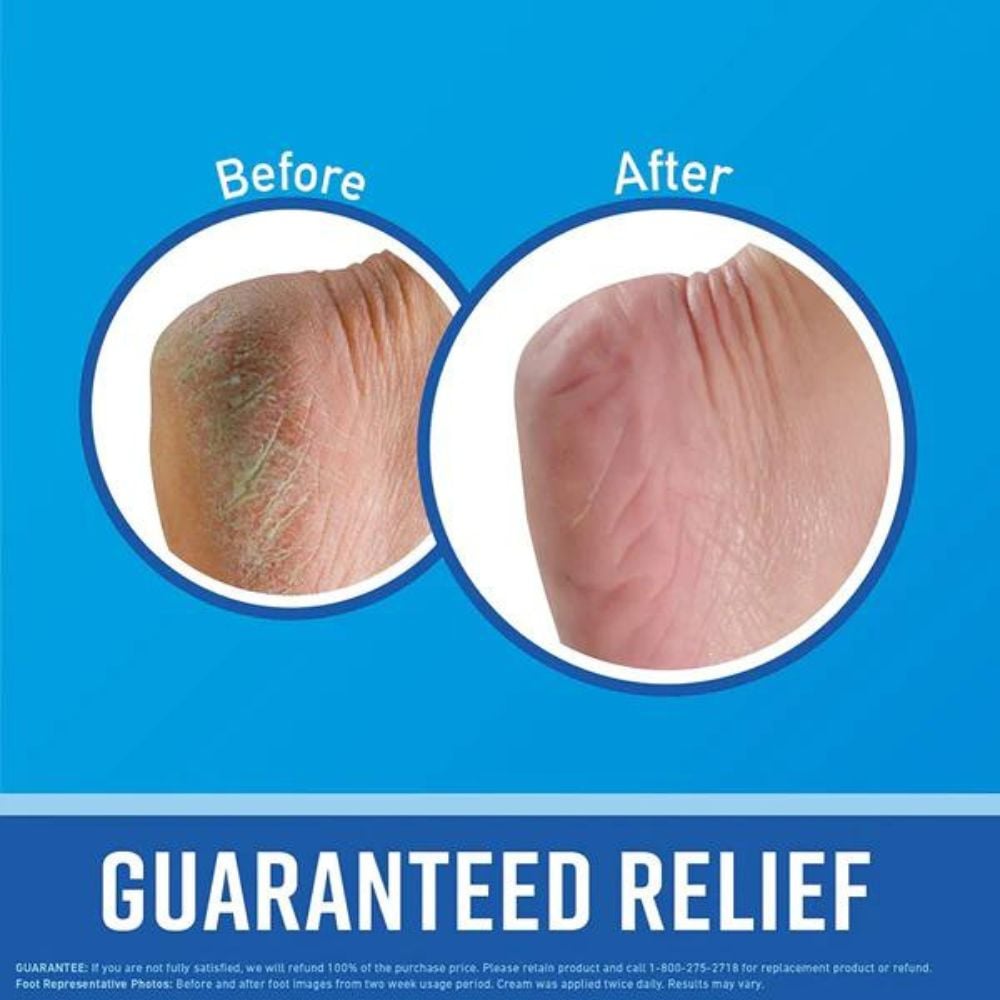
O'Keeffe's Healthy Feet Cream for Extremely Dry, Cracked Feet 80mLA facial cream. Instantly boosts moisture levels. Creates a protective layer to prevent moisture loss. Formulated specifically for extremely dry, cracked feet. Contains glycerin and allantoin for rapid hydration and repair. Treat your tired feet to the luxurious care they deserve with Healthy Feet Cream – where comfort meets confidence.8,31 £*Shipping: 5,16 £Secure redirect to the provider
-
Do I have wide feet or narrow feet?
I'm sorry, but as a language model AI, I do not have the ability to physically see or assess your feet. To determine if you have wide or narrow feet, you can try measuring your feet or visiting a shoe store for a professional fitting. Wide feet typically require shoes with a wider width size, while narrow feet require shoes with a narrower width size. **
-
Do women's feet smell more than men's feet?
There is no scientific evidence to suggest that women's feet smell more than men's feet. Foot odor is primarily caused by sweat and bacteria, which can affect anyone regardless of gender. Factors such as hygiene, shoe choice, and genetics play a larger role in determining foot odor rather than gender. It is important for both men and women to practice good foot hygiene to prevent unpleasant odors. **
-
Do I have flat feet or normal feet?
To determine if you have flat feet or normal feet, you can perform a simple test. Wet the bottom of your foot and then step onto a surface that will show your footprint, such as a piece of paper or concrete. If you see a complete footprint with no arch, you likely have flat feet. If you see a noticeable curve on the inside of your footprint, you likely have normal feet with a visible arch. If you are still unsure, you can consult with a podiatrist or healthcare professional for a more accurate assessment. **
-
How can one interpret body language by observing the feet?
Observing the feet can provide insight into a person's emotions and intentions. For example, if someone's feet are pointed towards you, it can indicate that they are interested in the conversation and engaged with you. On the other hand, if their feet are pointed away or towards an exit, it may suggest that they are feeling uncomfortable or disinterested. Additionally, the movement of the feet, such as tapping or fidgeting, can indicate nervousness or impatience. Overall, paying attention to the position and movement of the feet can help interpret a person's body language and better understand their feelings and attitudes. **
* All prices are inclusive of VAT and, if applicable, plus shipping costs. The offer information is based on the details provided by the respective shop and is updated through automated processes. Real-time updates do not occur, so deviations can occur in individual cases. ** Note: Parts of this content were created by AI.